Supply Chain Forum brings industry together to discuss investments, energy transition and supply chain challenges
The Supply Chain Forum brought together representatives from the oil and gas industry, financial markets, service companies and industry institutions to discuss the main challenges and opportunities facing the supply chain amid a new investment cycle, the energy transition and transformations in the global landscape. Held on Monday (21), the event featured discussions on financing, competitiveness, decarbonization, offshore projects and decommissioning.
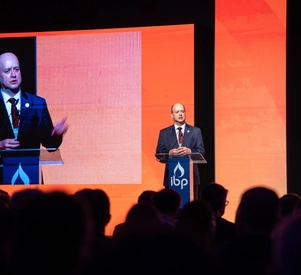
In his opening remarks, Roberto Ardenghy, president of the Brazilian Institute of Oil and Gas (IBP), highlighted the importance of integration among suppliers, operators and the different players across the supply chain to enhance efficiency, safety and the industry’s ability to respond to increasingly stringent regulatory and environmental requirements.
“I not only have confidence, but I have evidence that we will be able to deliver more and more, producing this oil more efficiently, at a lower operating cost and in a safer way. And this will only be achieved through this integration between suppliers and operators, among the various players in this enormous oil and gas supply chain,” he said.
The first panel, “Energy, Capital and Energy Security: A New Investment Landscape,” was led by Aldren Vernersbach, IBP’s Coordinator of Technical and Economic Analysis. The presentation addressed the outlook for Brazil’s oil and gas sector and the impact of the geopolitical landscape on investment decisions. Among the highlights was the projection of more than US$100 billion in investments in the sector between 2026 and 2030, as well as the role of energy security, which, alongside return and risk, has become one of the key variables considered by investors.
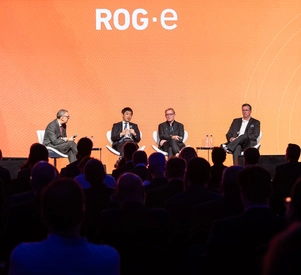
The following panel, “Financing and Competitiveness in Brazil’s Oil and Gas Supply Chain,” moderated by Luiz Carvalho, CFO of Brava Energia, brought together Arlindo Carvalho, Partner at BTG Pactual; Oivind Amundsen, CEO of Euronext Oslo Børs; Rodrigo Ribeiro, CEO and Chairman of Constellation Oil Services and Chairman of the Board of ABSPetro; and Rodrigo Rocha, Business Development Manager at MODEC.
Ribeiro presented Constellation’s transformation journey following its judicial reorganization process, highlighting the company’s regained access to capital markets and the importance of financing to sustain its growth. Arlindo Carvalho addressed the role of financial markets in structuring different capital alternatives for companies in the sector, including transactions in both the Brazilian and international markets.
Rocha highlighted the need to assess the industry’s competitiveness from a long-term perspective, considering not only project execution costs but also the value generated throughout the entire project life cycle. Amundsen, in turn, presented Euronext Oslo Børs’ strategy of focusing on the energy, transportation and food sectors and discussed opportunities for Brazilian companies to access international capital markets.
During his participation, the Norwegian executive also praised the Supply Chain Forum and the event’s structure. “This is my first time in Brazil, in Rio, and so far I am extremely impressed. It is a beautiful city, the people are so nice, and the event is fantastic. I think you are giving other events some very tough competition,” he said.
Throughout the afternoon, the program moved on to other strategic topics for the development of the supply chain. The panel “Supply Chain in the Energy Transition: Strategies for Decarbonization” featured Telmo Ghiorzi, president of ABESPetro, as moderator, alongside Janaina Ruas, SLB’s Director of Business Development and New Energies, and Lilian Melo, Executive Manager of the Center for Research, Development and Innovation (CENPES).
The following discussion, “Strengthening the Supply Chain to Enable the Next Offshore Projects: Competitiveness, Innovation and Collaboration,” was moderated by William Clavijo Vitto, Industrial Policy Specialist at IBP, and featured Alexandre Alves, Petrobras’ Executive Manager of Supply Chain; Amanda Gondim, Superintendent of Technology and Environment at ANP; and Jim Kettle, Commercial Director at Subsea7.
Closing the program, the panel “Decommissioning in Brazil: Pathways to Overcoming Bottlenecks” brought together Edson Valverde, Petrobras’ Decommissioning Manager, as moderator; André Guardin, Purchasing Manager at Gerdau; Igor Fita, Decommissioning Subsea Manager at Trident Energy; and Marcelo Dourado, Decommissioning Manager at SBM Offshore Group.
With strong audience participation, the final discussion underscored the relevance of decommissioning to the future of Brazil’s industry and addressed the challenges and pathways to increasing efficiency and overcoming bottlenecks associated with this stage of the offshore project life cycle.