Petrobras President Advocates Active Exploration and Forecasts 100% of Domestic Diesel Market to Be Supplied
On the final day of ROG.e 2026, the world’s largest energy festival, Magda Chambriard describes the search for new wells as vital to curbing pre-salt decline, accelerates development of the Equatorial Margin and projects protection of domestic supply amid geopolitical turbulence
In one of the strongest statements made at the closing of ROG.e 2026, Petrobras President Magda Chambriard stated unequivocally that “there is no future for an oil company without exploration” and that halting the drilling of exploration wells “is asking to die.”
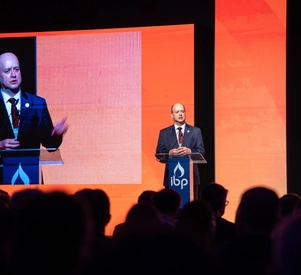
During a Strategic Talks conversation with Roberto Ardenghy, President of IBP (Brazilian Institute of Oil and Gas), the executive highlighted the progress of campaigns along the Equatorial Margin — with a focus on wells in Amapá and Rio Grande do Norte — as essential to replenishing reserves and mitigating the decline of the pre-salt from the coming years onward. Magda also emphasized the state-owned company’s international appetite, citing strategic gas discoveries in Colombia to meet demand over the next decade, as well as new assets in Côte d’Ivoire, Namibia and Mexico.
Against a backdrop of geopolitical uncertainty and risks of restrictions on global fuel trade by major powers, the executive revealed that Petrobras is considering, as part of its next Strategic Plan (2027–2031), expanding its refining capacity to supply up to 100% of the Brazilian diesel market.
Giant Fields in Production: From Project to Implementation
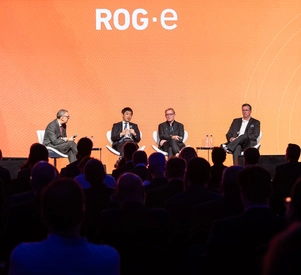
The vision of expansion and the pursuit of new exploration frontiers advocated by Petrobras was echoed by major global oil companies during a panel on the operation of giant offshore fields. ExxonMobil Brazil CEO Alberto Ferrin said that the country is home to the world’s most attractive energy resources and projected that, in the near future, other sedimentary basins beyond the pre-salt will take center stage in Brazil’s socioeconomic development. Citing the company’s successful track record in Latin America — such as in Guyana, where ExxonMobil already operates four FPSOs and is building three more — the executive highlighted the role of new hubs in generating regional prosperity and attracting productive capital.
Along the same lines, TotalEnergies Executive Vice President for Deepwater and Ultra-Deepwater Aurélie Clave emphasized that the major challenge for operators is to meet growing global demand by producing more energy with a lower carbon footprint. For the executive, the competitiveness of giant deepwater projects necessarily depends on four priorities: operational efficiency, strict cost discipline, decarbonization of activities, and agility in reducing the time between discovery and first oil. The C-level executives’ assessments reinforce the tone of the closing of ROG.e 2026: the attractiveness of Brazil’s offshore sector is undisputed, but retaining investment depends on speed, technology and a commitment to social and environmental responsibility.
Atlantic Geopolitics
The pursuit of new frontiers takes on even greater importance in light of global geopolitics, as highlighted by SBM Offshore CEO Øivind Tangen. Speaking at the Strategic Talks panel at ROG.e 2026, the executive said that recent instability in the Middle East and the closure of the Strait of Hormuz are accelerating geographic diversification and increasing the value of assets in the Atlantic Basin, a region emerging as a source of “the oil of the future.” With a strong presence in Brazil and Guyana — with Petrobras and ExxonMobil as its main clients — Tangen stressed that, although the industry is experiencing the most volatile period in its history, new hubs such as Brazil’s Equatorial Margin (particularly the Amazon River Mouth), Namibia, Nigeria and Suriname are key to attracting capital, ensuring operational longevity and global energy supply.
Territorial Development and Local Impact in Onshore Operations
Alongside large-scale operations, the activities of independent onshore operators were consolidated at the Independent Producers Forum as a decisive driver of socioeconomic transformation in Brazil’s interior, particularly in low-HDI regions of the Northeast. Panelists emphasized that the revitalization and extension of the useful life of mature fields prevent the premature decommissioning of assets and generate an immediate boost to local economies — exemplified by PetroReconcavo’s R$1 billion investment in regional suppliers. By prioritizing the hiring of local service providers, training the surrounding workforce and investing in environmental and cultural initiatives, independent producers create higher-skilled jobs and turn oil and gas activities into a permanent driver of productive inclusion and sustainable development for producing municipalities.
About IBP
The Brazilian Institute of Oil, Gas and Biofuels (IBP) has served for decades as the leading representative of Brazil’s energy sector, promoting knowledge, strategic debate and the development of an increasingly sustainable and innovative industry.
About ROG.e
ROG.e 2026 is sponsored by Petrobras, Shell, Equinor, Galp, Petronas, PRIO, Repsol Sinopec Brasil, TotalEnergies, Brava Energia, bp, Chevron, ExxonMobil, Misc, Acelen, Modec, Oceaneering, Origem, SBM Offshore, Subsea7, Vertical Group, Vibra, Accenture, Karoon Energy, PanAmerican Energy, SLB, TBG, TechnipFMC, ABB, ABS, Expro, Foresea, Honeywell Technologies, OceanPact, Vallourec, Viridien and EcoPetrol, Invest in Brazil, Apex Brasil and Abeemar, with official partnerships from United Airlines, Maringá Turismo, S&P Global, Goal Prime, Locatelli Group, Firjan Senai, Sebrae, Argos Consultoria and Fairmont.
ROG.e parallel events are sponsored by Petrobras, Shell, Subsea7, Accenture, Deloitte, Intelie, Petronas, Iconic, Mobil, Lubrax, Raízen, 2solve, Enerflex, Huajun Jincheng, Relimpp, Getsaf, Hailu Heavy Industry, Leflows, Lanyu Oil Field, PetroReconcavo, ABH2, Abiogás, CCS Brasil, DNV, TBG, Wison, Maire Tecnimont, Acelen, Hempel, PUC, INJ, Dolphin and Locatelli.
The event also features the following startups: CarbonAir Energy, Cognittiv, DescarbonTech, fu2re, Haka Bioprocessos, IndustriAll, Inflection Soft Works, Matcis, MicroDOTs, Mindsim, Mitico, Monitorai, Nanos, Neo Vision, NSGreen Fuels, Orion, Pix Force, Prothera, RFID Brasil, Scink, The Insight, Trackfy, Treevia, Vertesis, Viaflex and Voltpile, as well as participants in the NAVE and Sebrae RJ programs.
Media partners include Agência eixos, Brasil Energia, MegaWhat, Petro&Química, TN Petróleo, Band News, Oil and Gas Journal, Offshore Engineer, Petroleum Economist, Plurale, Recharge, Upstream, World Oil and World Pipelines.