IBP Discusses São Paulo’s Leading Role in the Energy Market
Event held in partnership with the Government of the State of São Paulo brought together experts to discuss the state's role in the energy transition
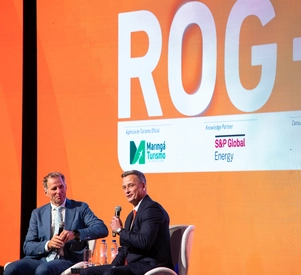
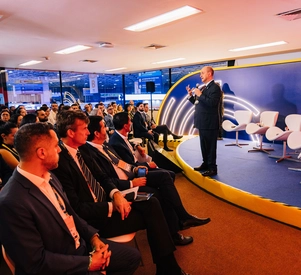
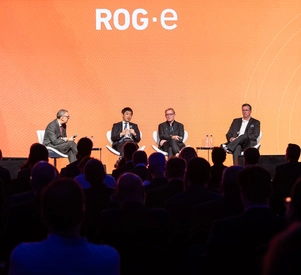
The importance of Brazil’s largest economy for the future of energy in the country was the central theme of the event “Energy Dialogues – The Future of Energy in São Paulo: Pathways to Competitiveness and Sustainable Development,” organized by the Brazilian Petroleum, Gas and Biofuels Institute (IBP) in partnership with InvestSP and the São Paulo State Secretariat for Environment, Infrastructure and Logistics (Semil) on June 9 at InvestSP headquarters. The first edition of the initiative brought together industry representatives and public-sector stakeholders to discuss pathways toward sustainable development in the context of the global energy transition.
Opening the event, InvestSP President Rui Gomes Junior highlighted the strong interest of foreign investors in energy projects in Brazil. “Foreign investors are looking closely at Brazil over the long term, and the energy transition agenda is highly relevant, especially regarding biofuels,” he said.
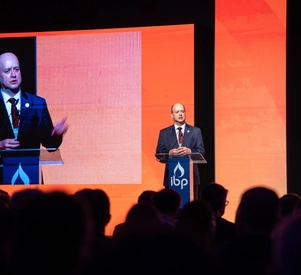
IBP President Roberto Ardenghy reinforced the importance of the oil and gas industry to the Brazilian economy and its role in the energy transition. “The sector has evolved and now produces 5.4 million barrels of oil per day, with technology, operational safety, and environmental responsibility,” he emphasized. Along the same lines, Marisa Barros, Deputy Secretary for Energy and Mining at Semil, stressed that energy security, sustainability, and competitiveness must go hand in hand, advocating for a transition that combines the development of low-carbon energy sources with the strategic role of oil and gas.
Decarbonization Challenges
Throughout the day, experts discussed progress in industrial decarbonization. Adriano Lima, Sustainability Director at Vast and coordinator of an IBP working group, highlighted efforts to reduce emissions in maritime and logistics operations. “We are focusing our logistics and transportation support activities on decarbonization, both for our own operations and to support our clients in the maritime logistics segment.”
Janaína Ruas, Business Development Director at SLB, emphasized the importance of integrating different energy sources and deploying new technologies to accelerate the sector’s decarbonization.
Jair Toledo, General Manager for Renewable and Low-Carbon Projects at Petrobras, highlighted the company’s ambitious goals and its role as an industry anchor. “We have a net-zero ambition for 2050, which demonstrates that production growth can occur sustainably. Decarbonization is gradual; it is energy addition. We must decarbonize our own activities and offer solutions to other industry players.”
Logistics and Biofuels Expansion
Another key topic was the expansion of infrastructure needed for fuels and biofuels. Pedro Sandrin, Legal Vice President at Acelen, presented logistical challenges related to Sustainable Aviation Fuel (SAF) production.
“We will import part of the feedstock used to produce the SAF that we will export, precisely because of the difficulty of receiving local biomass competitively.”
Adalberto Febeliano, General Director of Deinfra at FIESP, reinforced the need for investment in multiple transportation modes to increase the sector’s competitiveness.
“We need to invest more in other modes, such as highways, and we have a functional waterway crossing the state that can support the sector’s development.”
Camila Affonso, Senior Partner at Leggio Group, also highlighted the need for additional pipeline investments.
The Potential of Biomethane
Biomethane’s potential was also at the center of discussions. Participants agreed that the energy transition will be characterized by the coexistence of multiple energy sources and technologies.
João Pedro Araújo, Institutional Relations Analyst at Scania, emphasized biomethane’s potential in Brazil and the importance of coordinated action among stakeholders.
Josiani Napolitano, CEO of Abiogás, noted that the Brazilian private sector is ready to move forward, but that coordination among market participants will be essential to accelerate growth.
Representing the state government, Lais Almada, Director of Oil, Natural Gas and Biofuels at Semil, highlighted studies being conducted to support integration across different segments of the energy value chain.
Supply Chain Opportunities
Opportunities for São Paulo’s industrial supply chain were also discussed. Telmo Ghiorzi, President of Abespetro, emphasized the potential of the state’s industrial base to meet oil and gas sector demand.
Idarilho Gonçalves Nascimento Neto, Director of Institutional Relations at Tenaris, pointed to infrastructure bottlenecks. “Although a large share of production takes place in São Paulo, exports are shipped through the Port of Rio de Janeiro, which affects competitiveness and costs.”
Further emphasizing the importance of São Paulo’s industry, Claudio Makarovsky, Consultant at InvestSP, stated: “Fifty-one percent of Brazil’s oil and gas revenue comes from São Paulo due to its machinery, equipment manufacturing, and refining industries.”
The geopolitical landscape was also addressed by Conrado Manzoni of Argus Media, who warned about the impacts of the conflict in the Middle East.
“We are experiencing an unprecedented situation, with a supply restriction of 18 million barrels of oil per day,” said Manzoni, projecting an average oil price of USD 85 per barrel next year.
Ernesto Sampaio, CEO of São Sebastião Port Authority, presented progress on projects aimed at expanding port infrastructure to support offshore activities in the pre-salt region.
“The Port of São Sebastião is the most suitable facility to meet the needs of oil companies operating in the region. The project still needs to be qualified under the federal Investment Partnership Program (PPI), which is relatively straightforward.”
Growth of the Free Natural Gas Market
Closing the event, experts discussed advances in São Paulo’s free natural gas market.
Amauri Gavião, Director of Piped Gas at Arsesp, explained that 70% of São Paulo’s industrial market already operates in the free market, which currently includes 55 trading companies.
The need to improve data infrastructure was highlighted by Antônio Quirino, CEO of Gashub.
“Despite progress, our market is still in an early stage of maturity. We need to improve the efficiency of contractual dynamics.”
Despite existing challenges, financial results have been significant. Guilherme Mattos, Commercial Director at Edge, pointed out that migration to the free market has generated savings for companies in recent years, and that 70% of the traded volume is already under this model.
“It is essential to maintain a secure regulatory framework that inspires confidence for investment.”
Finally, Letycia Pedroza of Abrace Energia celebrated the participation of large consumers, with some already allocating 100% of their contracts to the free market.
“I see regulatory evolution in the market and increasing confidence in the model,” she concluded.
The next edition of the Energy Dialogues initiative will take place on July 3.