City Hall Signs Agreement to Transform the Former Automobile Club Building into the Museum of Petroleum and New Energies
Historic Landmark on Rua do Passeio Undergoes Full Restoration and Will House a New Cultural Institution Dedicated to the History of the Energy Industry
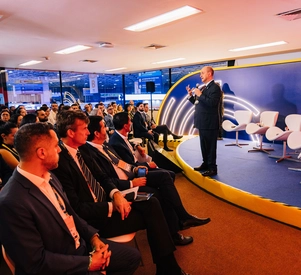
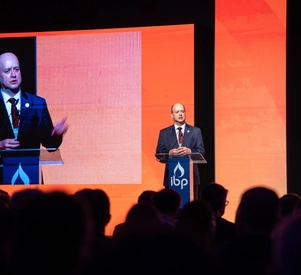
Rio de Janeiro Mayor Eduardo Paes participated on Wednesday (March 18) in the signing ceremony for the agreement granting use of the former Automobile Club of Brazil building, located on Rua do Passeio in Cinelândia, for the creation of the Museum of Petroleum and New Energies. The facility will be managed by the Brazilian Petroleum, Gas and Biofuels Institute (IBP) and will serve as a new cultural institution for the city, dedicated to preserving the history of the oil and gas industry while fostering dialogue on energy transition.
“Today is a highly symbolic day for Rio de Janeiro. This building was originally inaugurated during the Imperial period as one of the city’s great social venues. Over time, it witnessed the history of both Rio and Brazil. We are now giving it a new chapter that is closely connected to the vocation of this state. The Museum of Petroleum and New Energies is being created not only to preserve memory, but also to help us think about the future, energy transition, innovation, and new technologies. Doing so within this building carries special significance,” said Mayor Eduardo Paes, who also encouraged the institution responsible for the museum project to invest in the restoration and enhancement of Passeio Público, the historic park located directly across from the former Automobile Club building.
The historic property, comprising approximately 4,400 square meters across three floors, is currently undergoing restoration by the Rio de Janeiro City Government. The project represents an investment of BRL 36.3 million and, upon completion, the building will be granted to IBP under a 30-year concession agreement. Plans include the creation of exhibition and educational spaces dedicated to promoting knowledge about the energy sector and its ongoing transformation.
For the implementation of the museum, IBP is partnering with Petrobras, Prio, and CNOOC (China National Offshore Oil Corporation), as well as the Institute for Development and Management (IDG), which is responsible for developing the museum project. The new facility is expected to open during the first half of 2028.
“This is a moment of great pride for the oil industry and for IBP, an institution that has represented the sector for more than 60 years, generating technical knowledge, training professionals through its corporate university (UnIBP), and fostering technological partnerships. Every major city has a petroleum museum. We hope to see children, young people, workers, and society as a whole enjoying this space and learning about the sector,” said Claudio Nunes, IBP’s Executive Director for Exploration and Production.
“The history of petroleum in Brazil deserves to be shared with the world. We have evolved from a country heavily dependent on imports into one of the world’s leading producers, with global recognition in deepwater and ultra-deepwater operations, thanks to technological development and the training of highly qualified professionals. Future generations—our children, grandchildren, and nephews and nieces—need to understand this journey and the role energy has played in the country’s development. We are proud to be part of an initiative that values this history and brings it closer to society,” said Petrobras President Magda Chambriard.
The initiative also reinforces the importance of the oil, gas, and energy sector to Rio de Janeiro’s economy, where it supports approximately 59,800 formal jobs. In addition, the project expands the city’s network of cultural institutions dedicated to preserving historical memory and promoting scientific, technological, and historical knowledge.
“It is important to highlight the significance of the oil industry for the city of Rio de Janeiro. But this is not only about petroleum—it is the Museum of Petroleum and New Energies. It combines education with a vision for the future. Bringing together history and such an important industry while looking ahead is essential, and we are delighted that this project will take place in the Automobile Club building,” said Secretary for Economic Development Osmar Lima.
Restoration of the Historic Automobile Club of Brazil Building
Alongside the museum project, the Rio de Janeiro City Government is carrying out a comprehensive restoration of the Automobile Club of Brazil building. Located in one of the city’s most historic districts, near landmarks such as the Lapa Arches and the Cecília Meireles Hall, the property features monumental halls distributed across three floors.
The restoration is being led by Rio-Urbe, the Municipal Urban Development Company, which is linked to the Municipal Infrastructure Department. Construction began in June 2023 and includes the complete structural and architectural restoration of the building while preserving its original characteristics and ensuring its conservation for future generations. Completion is scheduled for the end of this year.
Architectural and Historical Heritage
As the property is officially protected by the State Institute of Cultural Heritage (INEPAC), all interventions are being carried out in accordance with heritage preservation guidelines and under the technical supervision of the agency.
The project includes restoration of the historic façades, recovery of ornamental and decorative elements, preservation of original window frames, and rehabilitation of emblematic interior spaces, including the main entrance hall, the foyers on each floor, the principal halls, and the area beneath the dome. Structural repairs, masonry restoration, reinforcement of compromised sections, and reconstruction of architectural elements deteriorated over time are also being undertaken.
The ground floor, covering approximately 1,600 square meters, includes the monumental entrance hall and support areas. The first floor, with approximately 1,500 square meters, houses the main ceremonial hall of roughly 500 square meters, as well as the stained-glass hall and adjoining rooms. The second floor covers approximately 1,200 square meters and includes a mezzanine, front halls, and complementary spaces.
The project also includes a complete modernization of building systems, including new electrical, plumbing, air-conditioning, and fire protection systems, as well as upgrades to ensure full compliance with current accessibility standards.
An Icon of Brazilian History
The Automobile Club building, the site of significant moments in Brazil’s political history, is one of the architectural landmarks of Rio de Janeiro’s city center and represents more than a century of the country’s social, political, and cultural history.
The property was originally designed as a private residence by architect, diplomat, and intellectual Manuel de Araújo Porto-Alegre. In the mid-19th century, it was acquired by the Fluminense Casino and became a gathering place for Rio de Janeiro’s elite and members of the Imperial Family.
In 1854, the building underwent a major renovation led by architect Luís Hoske, who transformed the residence into a two-story structure featuring striking neoclassical architecture and a traditional ballroom. In the early 20th century, the property became home to the Clube dos Diários and, in 1910, underwent another major renovation designed by French architect Joseph Gire, known for iconic Rio landmarks such as the Copacabana Palace and Laranjeiras Palace.
In 1924, the building became the headquarters of the Automobile Club of Brazil, serving as one of the country’s leading gathering places for political and cultural elites. It secured its place in Brazilian history in 1964, when it hosted the final speech delivered by President João Goulart before the military coup.